Introduction:
Have you ever walked through a factory, warehouse, or construction site and noticed those sturdy, no-nonsense staircases? Those are industrial steel stairs, and they are far more important than they look at first glance. They are not just a way to move between levels—they are a critical part of safety, efficiency, and long-term structural reliability.
In today’s fast-paced industrial world, durability and safety are non-negotiable. Businesses need solutions that can withstand heavy use, harsh environments, and strict safety regulations. That is exactly where industrial steel stairs shine. They offer unmatched strength, low maintenance, and long service life, making them a top choice across industries.
In this article, we will explore everything you need to know about industrial steel stairs. From their design and materials to their benefits and applications, this guide will give you a clear, expert-level understanding—all explained in a simple and engaging way.
What Are Industrial Steel Stairs?
A Simple Definition
Industrial steel stairs are heavy-duty stair systems made primarily from steel, designed for use in industrial and commercial environments. Unlike residential stairs, these are built to handle high traffic, heavy loads, and tough conditions like moisture, chemicals, and extreme temperatures.
They are commonly used in factories, warehouses, power plants, construction sites, and even outdoor environments where reliability is essential.
Key Features That Set Them Apart
First of all, industrial steel stairs are designed with strength in mind. They are engineered to carry significant weight without bending or failing. This makes them ideal for environments where equipment and workers constantly move up and down.
Secondly, they are built for safety. Features like anti-slip treads, handrails, and guardrails ensure that workers can use them safely even in challenging conditions such as wet or oily surfaces.
Lastly, they are highly customizable. Depending on the needs of a facility, these stairs can be designed in various shapes, sizes, and configurations, including straight flights, spiral stairs, and platform-integrated systems.
Where You’ll Commonly See Them
You will find industrial steel stairs in places where durability and function are more important than aesthetics. For example, they are widely used in manufacturing plants where machinery requires elevated access.
They are also common in warehouses, where workers need quick and safe access to storage platforms and mezzanines. In outdoor environments, such as oil rigs or construction sites, their resistance to weather makes them an obvious choice.
Types of Industrial Steel Stairs
Straight Flight Stairs
Straight flight stairs are the most basic and commonly used type. As the name suggests, they run in a straight line from one level to another without any turns.
These stairs are simple to design and install, making them a cost-effective option. They are ideal for spaces where there is enough room for a direct path between floors.
Another advantage is ease of use. Workers can move quickly up and down without navigating turns, which improves efficiency in busy environments.
Spiral Steel Stairs
Spiral stairs are designed to save space. Instead of extending outward, they wind around a central column, making them perfect for tight areas.
Although they take up less space, they still provide strong and reliable access between levels. However, they are usually used for lighter traffic compared to straight stairs.
In addition, spiral stairs can add a modern industrial look to a facility, combining functionality with a unique design element.
Platform and Mezzanine Stairs
These stairs are integrated with platforms or mezzanine systems. They are commonly used in warehouses and factories where additional floor space is created above the ground level.
They allow workers to access elevated storage or work areas safely and efficiently. These systems often include guardrails and safety gates for added protection.
Furthermore, they can be customized to fit specific layouts, making them highly versatile in industrial settings.
L-Shaped and U-Shaped Stairs
These stairs include turns, either at a right angle (L-shaped) or with a landing that creates a U-shape. They are useful in spaces where a straight staircase is not practical.
The landings also provide resting points, which can be helpful in high-traffic areas. This design improves safety by reducing fatigue and allowing better control while ascending or descending.
Materials Used in Industrial Steel Stairs
Carbon Steel
Carbon steel is one of the most commonly used materials for industrial stairs. It offers excellent strength and durability at a relatively low cost.
However, it may require protective coatings to prevent rust, especially in outdoor or humid environments. With proper maintenance, it can last for many years.
Stainless Steel
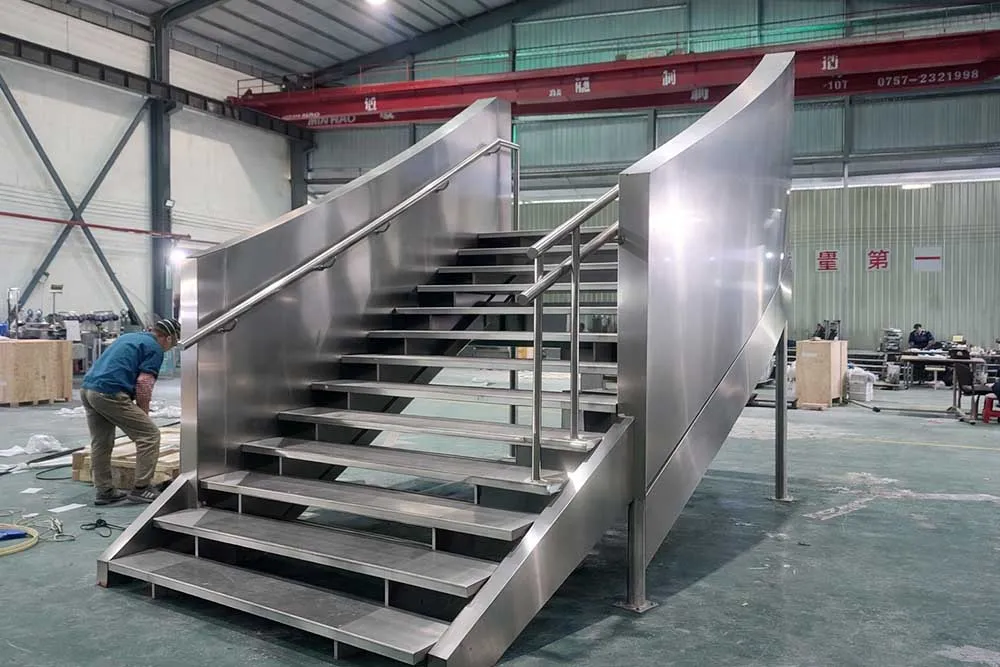
Stainless steel is known for its corrosion resistance. This makes it ideal for environments where moisture, chemicals, or extreme conditions are present.
Although it is more expensive than carbon steel, it requires less maintenance over time. This makes it a cost-effective option in the long run.
Additionally, stainless steel has a clean and modern appearance, which can be beneficial in facilities where aesthetics matter.
Galvanized Steel
Galvanized steel is coated with a layer of zinc to protect it from corrosion. This makes it highly durable in outdoor environments.
It is often used in construction sites, bridges, and industrial facilities exposed to weather conditions. The coating significantly extends the lifespan of the stairs.
Moreover, it requires minimal maintenance, which is a major advantage for businesses looking to reduce long-term costs.
Benefits of Industrial Steel Stairs
Exceptional Strength and Durability
One of the biggest advantages of industrial steel stairs is their strength. They can handle heavy loads and constant use without losing their structural integrity.
This durability ensures that they remain safe and functional for many years, even in demanding environments.
Low Maintenance Requirements
Compared to other materials, steel stairs require minimal maintenance. With proper coatings or treatments, they resist rust and wear effectively.
This reduces the need for frequent repairs or replacements, saving both time and money.
Enhanced Safety Features
Safety is a top priority in industrial settings. Steel stairs can be equipped with anti-slip treads, sturdy handrails, and protective guardrails.
These features reduce the risk of accidents and ensure compliance with safety regulations.
Versatility and Customization
Industrial steel stairs can be customized to meet specific needs. Whether it is size, shape, or additional features, they can be tailored to fit any space.
This flexibility makes them suitable for a wide range of applications, from small workshops to large industrial complexes.
Design Considerations for Industrial Steel Stairs
Load Capacity
One of the first things to consider is how much weight the stairs need to support. This includes both the number of people and any equipment that may be carried.
Proper engineering ensures that the stairs can handle these loads safely without any risk of failure.
Safety Standards and Regulations
Industrial stairs must meet specific safety standards. These regulations ensure that the design includes proper dimensions, handrails, and slip-resistant surfaces.
Following these standards is essential to protect workers and avoid legal issues.
Space and Layout
The available space plays a big role in the design. In tight areas, spiral or L-shaped stairs may be more suitable.
In larger spaces, straight stairs may be the best option for efficiency and ease of use.
Environmental Conditions
The environment in which the stairs will be used also matters. For example, outdoor stairs need protection against weather, while indoor stairs may require resistance to chemicals or heavy wear.
Choosing the right material and finish ensures long-term performance.
Installation Process
Planning and Design
The installation process starts with careful planning. Engineers and designers create detailed plans based on the specific requirements of the site.
This includes measurements, load calculations, and safety considerations.
Fabrication
Once the design is finalized, the stairs are fabricated using high-quality steel. This process involves cutting, welding, and assembling the components.
Precision is key to ensure that all parts fit together perfectly.
On-Site Installation
After fabrication, the stairs are transported to the site and installed. This involves securing them to the structure and ensuring proper alignment.
Professional installation is important to guarantee safety and durability.
Final Inspection
Before the stairs are put into use, a thorough inspection is conducted. This ensures that everything meets safety standards and functions correctly.
Maintenance Tips for Long-Term Performance
Regular Inspections
Routine inspections help identify any issues early. Checking for signs of wear, corrosion, or damage ensures that problems can be addressed quickly.
Cleaning and Coating
Keeping the stairs clean prevents buildup of dirt and debris. Applying protective coatings can also extend their lifespan.
Repairs and Upgrades
If any part of the stairs becomes damaged, it should be repaired immediately. Upgrading components, such as adding better anti-slip surfaces, can also improve safety.
Common Applications of Industrial Steel Stairs
Manufacturing Facilities
In factories, steel stairs provide access to machinery and elevated work areas. Their strength and durability make them ideal for such environments.
Warehouses
Warehouses often use mezzanine systems, and steel stairs are essential for accessing these levels safely.
Construction Sites
Temporary and permanent steel stairs are widely used in construction. Their ability to withstand harsh conditions makes them a reliable choice.
Outdoor Installations
Steel stairs are also used in outdoor settings such as fire escapes, bridges, and industrial plants. Their resistance to weather ensures long-lasting performance.
Cost Factors and Budgeting
Material Costs
The type of steel used affects the overall cost. Industrial Steel Stairs Stainless steel is more expensive, while carbon steel is more budget-friendly.
Design Complexity
More complex designs, such as spiral or custom stairs, may increase costs due to additional fabrication work.
Installation Expenses
Professional installation adds to the total cost but ensures safety and proper performance.
Long-Term Value
Although the initial investment may be higher, the durability and low maintenance of steel stairs make them cost-effective over time.
Conclusion:
Industrial steel stairs are more than just a functional element—they are a vital part of any industrial environment. They provide strength, safety, and reliability that other materials simply cannot match.
Whether you are designing a new facility or upgrading an existing one, investing in high-quality steel stairs is a smart decision. They offer long-term value, minimal maintenance, and the flexibility to meet a wide range of needs.
So, if you are looking for a solution that combines durability with safety, industrial steel stairs are definitely worth considering.